
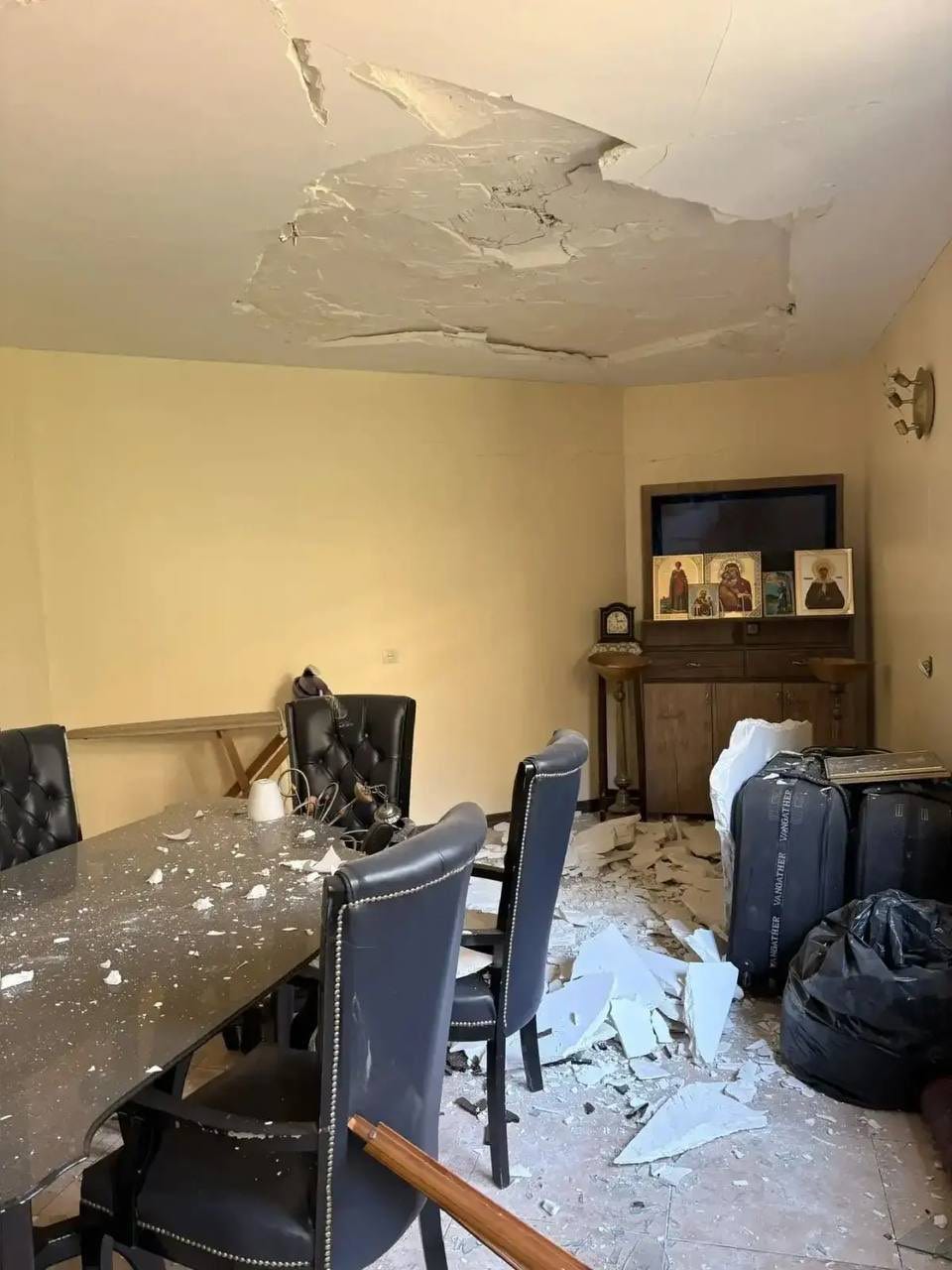
Divine Dispatch: Moscow claims US/Israel strikes in Tehran damaged a Russian Orthodox Cathedral
Russia’s intelligence targets Bartholomew (again) ● Ukraine’s new Orthodox rivalry ● Serbia’s Vučić and Porfirije agree on a new university
Welcome to Divine Dispatch, your expertly curated weekly briefing on the pulse of church geopolitics.
Happy Easter to those who celebrated it this weekend. Last year, we were offered a glimpse of the future with joint Easter celebrations made possible due to calendar alignment. Yet the much-trailed “hype” around a common Easter date, fuelled for months by the momentum of the Nicaea anniversary, appears to have evaporated entirely this year.
In the last week, we have witnessed the true impact of church geopolitics as religious developments continue to be impacted by ongoing wars and conflict.
Moscow has accused a US/Israeli strike on a nearby target of damaging a historic Russian Orthodox Church in Tehran. Meanwhile, Russia’s foreign intelligence service, the SVR, had blamed the Ecumenical Patriarch Bartholomew for alleged interference in upcoming elections for Georgia’s new Patriarch.
It also looks like the Orthodox Church in Ukraine is up against another rival - its predecessor church.
Subscribe by entering your email address to cut through the noise and gain an understanding of the latest, often rapidly evolving, church geopolitics.
Stories that caught my attention:
📌 Let’s begin 3,2,1
🇺🇦 After the death of Patriarch Filaret of the Ukrainian Orthodox Church- Kyiv Patriarchate (UOC-KP) last month, the uncertainty over the future of the structure he led, the Kyiv Patriarchate, continues. The independent and autocephalous Orthodox Church of Ukraine, led by Metropolitan Epifaniy, has initiated a number of measures to merge the Kyiv Patriarchate with the OCU, opening a new (albeit tiny) ecclesiastical rift in Ukraine. Despite Epifaniy’s push, Archbishop Nykodym was elected on 21 March to lead the Kyiv Patriarchate.
🇷🇸 Serbian authorities have announced the creation of a new state university with the Serbian Orthodox Church - to be named after Saint Sava. Critics say this is another sign of the closeness between Patriarch Porfirije and Serbia’s strongman Aleksandar Vucic.
↳ As part of the local election campaign in Knjaževac (eastern Serbia), a Serbian priest appeared in an SNS promotional video praising Aleksandar Vucic, drawing criticism. The Eparchy of Timok issued a statement saying Siniša Ðorđević is a “rogue priest”.
🇮🇷🇮🇱🇺🇸 A Russian Orthodox cathedral (St Nicholas) in Tehran (Iran) was damaged in a US/Israel strike on 1 April. This caused a pointed reaction in Moscow. Russian Foreign Ministry Spokeswoman Maria Zakharova expressed “shock”, saying the damage caused was a result of a “barbaric air strike by the US-Israeli tandem”.
↳Dame Melinda Simmons, the UK’s ambassador to Poland (previously Ukraine), responded to Zakharova’s statement on X, saying “You hit a monastery in Lviv just last week,” referring to a Russian drone striking a 16th-century Bernardine monastery in Lviv.
🇷🇺🇬🇪 Russia's foreign intelligence service, the SVR, went after the Ecumenical Patriarch Bartholomew once again - this time over alleged meddling in Georgian Church patriarchal elections, accusing him of pursuing a “treacherous line aimed at splitting global Orthodoxy”.
The timing of Russia’s intelligence meddling is significant, occurring just after the Georgian Orthodox Church asked for less public speculation over the name of the future Patriarch.
One of the SVR’s named candidates does not even qualify for the race.
Also, an interesting observation is that compared to the first attack, when the SVR called Bartholomew “the Antichrist”, this 2nd attempt saw almost no reaction from the Phanar. See my reporting on this from January.
🇺🇦 Zelensky's Easter ceasefire proposal received a muted response from Moscow. Ukraine’s president visited the Ecumenical Patriarchate on Saturday (4 April) and spoke to the Patriarch of Constantinople, Bartholomew I. Both discussed the issue of the return of Ukrainian children, prisoners of war, as well as the development of the church in Ukraine.
On Friday, Pope Leo spoke with Zelensky, discussing the humanitarian situation and the need for aid to reach conflict-affected areas. The topic of POW release was also discussed. The Pope reaffirmed his closeness to the Ukrainian people.
🇸🇾 After the eruption of sectarian violence in Syria’s Hama province (Al-Suqaylabiyah) at the end of last March, the Patriarch of Antioch John X held talks with Syria’s Presidential advisor Dr Ahmad Mowaffaq Zidan. The Patriarch urged firm action against those who undermine the peace in Syria.
See my story for The Tablet (below) for more context of what happened.
🇽🇰🇷🇸 The Abbot of the Crna Reka Monastery, Father Andrej, warned of the precarious position of the Serbian Orthodox Church in Kosovo and attempts for “historical revisionism” which he says is supported by the Kosovo authorities to present Serbian church properties as Albanian.
“What worries us is the promotion of revisionist history, which claims that Serbian Orthodox shrines and monasteries are actually Albanian shrines and monasteries. This is very dangerous for us, although from a scientific point of view it is almost ridiculous - if it were not tragic”, the Abbot stated at a conference in Pristina.
He added: “Our community feels very threatened, and I ask you to understand us. We cannot speak calmly and relaxedly in a situation where we see that we are practically disappearing from Kosovo, and in the public sphere, you will never hear that Serbs are an important part of the mosaic of people, history, culture and religion that has always existed here.”
📌 My recent work:
Recent articles I’ve written or contributed:
1 April - Syrian Churches restrict Easter celebrations after sectarian violence. (The Tablet)
2 April - Patriarch Bartholomew of Constantinople comes under further attack by Russia. For Church Times
I’m always keen to hear from you, so feel free to send a message or comment with the kinds of articles you’d like to read or any suggestions for how this newsletter could evolve.
📌 Last week’s long-form analysis
Dubious claims about Vatican takeover of Serbian Orthodox Church properties in Kosovo
This is the fifth and final article in a series of in-depth analyses I’ve been writing in partnership with the Western Balkans Anti-Disinformation Hub on the changing nature of Orthodox and other religious disinformation approaches in the Balkans.
As always, thank you for reading and supporting this work. If you found this edition useful, feel free to share it with others who follow church affairs and religious diplomacy.
Many thanks,
Andreja Bogdanovski


